
Publications
Gerdesmann, D., Schwichow, M., & Koerber, S. (2026). Factors that explain simulation-based inquiry performance in physics learning. Instructional Science, 54(2), 52. https://doi.org/10.1007/s11251-026-09806-2
Inquiry learning SDDS Cartesian diver Content knowledge Control-of-variables Functional thinking
We examined why inquiry learning—where students formulate and test hypotheses—sometimes falls short. In a study with 232 students, cognitive factors like control-of-variables strategy and functional thinking were central to performance in a digital physics task. Profile analysis showed these factors defined performance groups, with little impact from dispositions. Their importance for individual inquiry aspects may vary by proficiency level, so we call for stronger theorisation of inquiry-competency links to improve task tailoring.
Pietschnig, J., Gerdesmann, D., Zeiler, M., & Voracek, M. (2022). Of differing methods, disputed estimates and discordant interpretations: the meta-analytical multiverse of brain volume and IQ associations. Royal Society Open Science, 9(5), 211621. https://doi.org/10.1098/rsos.211621
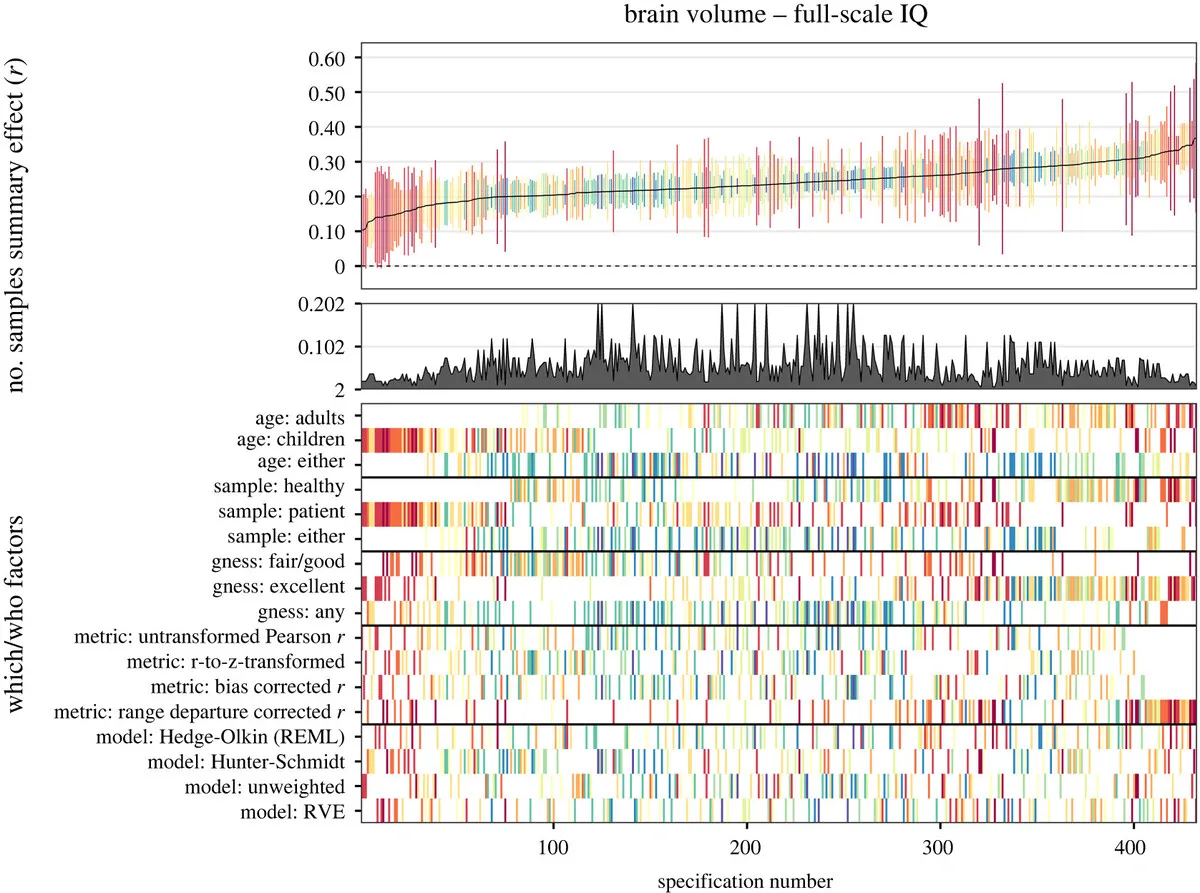
Brain volume IQ Meta-analysis Multiverse analysis Open science
We examined why earlier studies had reached different conclusions about the link between brain volume and IQ. We combined results from 86 studies with more than 26,000 participants and tested how much the estimate changed across different reasonable analytic choices. We found mostly modest but reliable associations, and that earlier stronger estimates were likely inflated by reporting and analysis choices.

