Extended excerpt from the NBC News article ‘Three people are dead after a man openend fire in an Indianapolis mall’
This page presents an extended excerpt from a NBC News article, used in a research study on how people reason about scientific information in polarized topics.
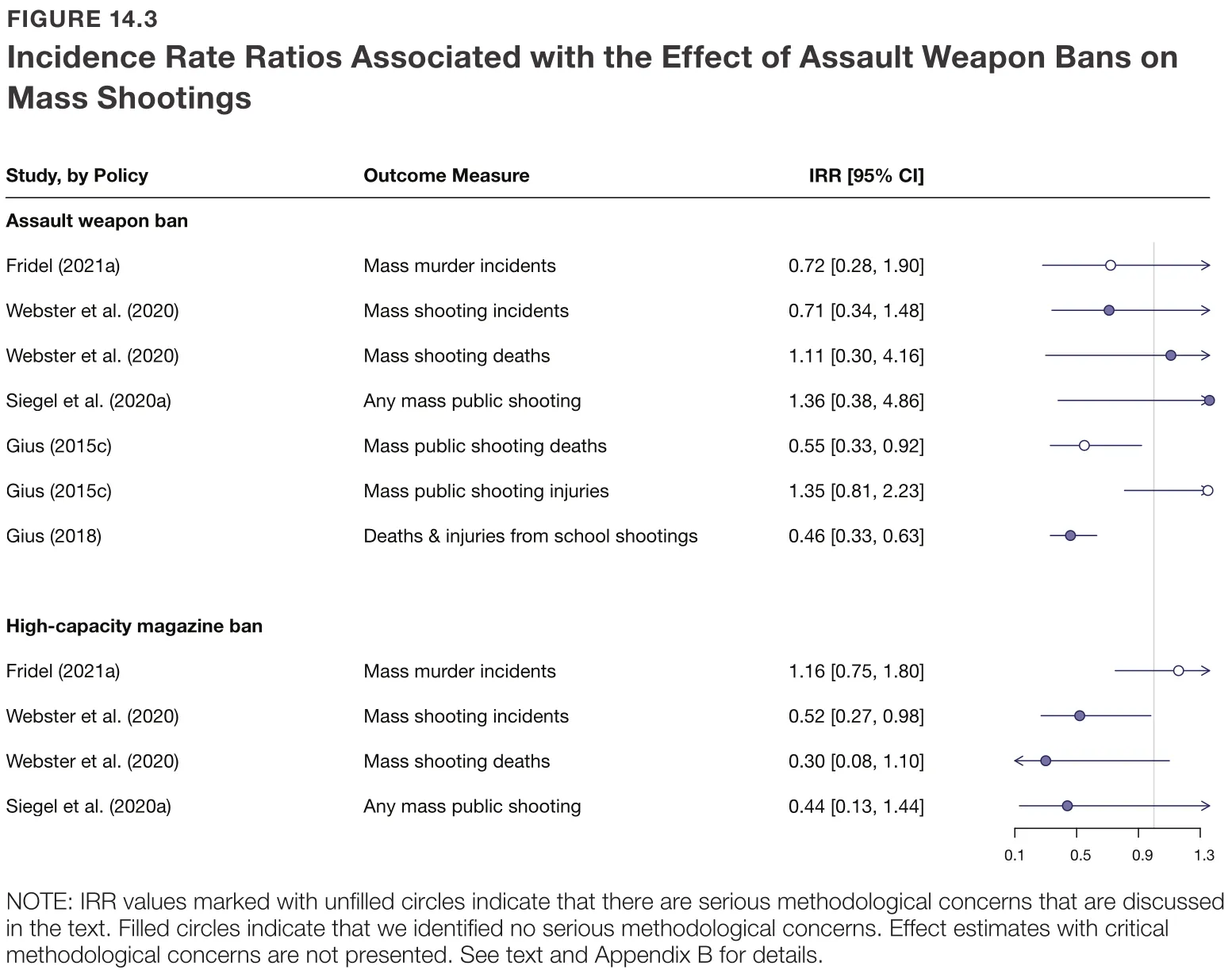
To clarify the evidence referenced in general terms in the original article, I have attached relevant research from RAND which reviews existing studies on the effects of ‘assault’-weapon and high-capacity magazine bans on mass shooting incidents.
Hosting these pages serves a study task in which participants selected one of eight excerpts and drafted a short social-media post (Bluesky). Hosting does not imply endorsement by the original authors or outlets.
All rights remain with the original authors and publishers. This page is provided for research and educational purposes.
Sources
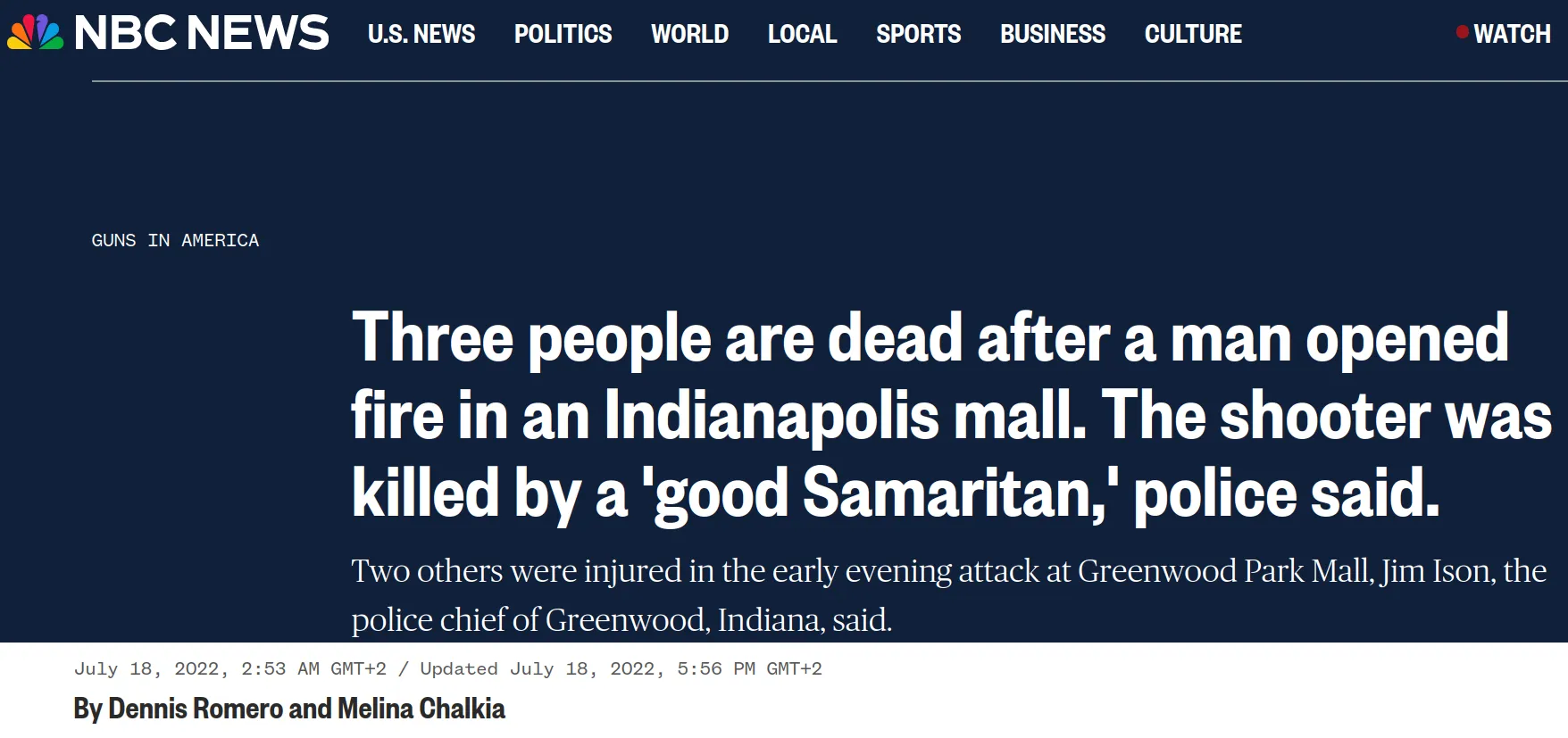
Four people were dead, including the suspected shooter, after a man with a long gun entered a mall south of Indianapolis and opened fire, police said.
“The real hero of the day was the Samaritan that was lawfully carrying a firearm who was able to stop the shooter almost as soon as it began,” Ison said.
The suspected shooter stayed in the bathroom for 62 minutes, then exited and began firing near and into the mall’s food court with a SIG Sauer M400, a semiautomatic rifle of a class of guns sometimes called assault weapons, authorities said.
Mark Oliva, spokesperson for the National Shooting Sports Foundation, a gun industry trade group, decried Sunday’s shooting, but argued that focusing on AR-style weapons would not save lives.
“The firearm industry takes these attempts to ban entire classes of firearms seriously,” he said by email. “We lose focus on solving the problems of criminal behavior when we focus on the tool and not the motive of the criminal.”
According to a recent Rand Corp. review of existing causal-design studies, evidence for assault-weapon/high-capacity magazine bans on mass shootings and their fatalities is limited or inconclusive. The authors also note that investigations into defensive gun use and related owner-salient outcomes are next to non-existent, limiting comprehensive cost-benefit analyses of some proposed restrictive gun policies.